Sunday, 9 June 2024

YOUR ULTIMATE GUIDE TO CHOOSING THE RIGHT GRASS FOR YOUR LAWN

In Kenya, the vibrant and diverse climate allows for a plethora of lawn grasses, each suited to different regions and uses. From the tropical coasts to the temperate highlands, there's a grass variety perfect for every landscape. Here’s a detailed guide to some of the most common lawn grasses in Kenya, their benefits, and their drawbacks to help you create the lush, green paradise you desire.

                                             Image credit: backyard living

1. Buffalo Grass (Stenotaphrum secundatum)

Advantages

  • Shade Tolerance: Ideal for shaded areas with large trees.
  • Drought Resistance: Minimal watering needed once established.
  • Soft Texture: Perfect for recreational areas due to its comfortable feel.

Disadvantages

  • Slow Growth: Takes time to establish a full lawn.
  • Higher Maintenance Costs: More expensive to establish and maintain compared to other types.

2. Kikuyu Grass (Pennisetum clandestinum)

Advantages

  • Durability: Excellent for high-traffic areas such as sports fields.
  • Rapid Growth: Quick to establish, providing swift green cover.
  • Drought Tolerance: Very resilient once established, ideal for arid regions.

Disadvantages

  • Invasive Nature: Can spread aggressively, requiring regular control.
  • High Initial Water Requirement: Needs frequent watering to establish.

3. Pemba Grass (Axonopus compressus)

Advantages

  • Grows Well in Shade: excellent for areas with partial to full shade.
  • Minimal Care Required: Once established, Pemba grass requires relatively low maintenance.
  • Comfortable Underfoot: The grass has a soft, fine texture, making it ideal for lawns playground.
  • Soil Stabilization: Its helps control soil erosion, particularly on slopes and embankments.
  • Hardy Against Pests and Diseases: it's resistant to common lawn diseases and pests.

Disadvantages 

  • Takes Time to Establish: it can take longer time to establish a full, lush lawn.
  • Requires Regular Watering: requires regular watering during dry periods.
  • Can Spread Aggressively: Pemba grass can spread into garden beds and other areas if not properly managed.
  • Struggles in Cold Climates: It's not suitable for cooler highland regions of Kenya..

4. Paspalum Grass ( Paspalum vaginatum)

Advantages

  • Salt Tolerant: Ideal for coastal areas, Paspalum handles salty conditions better than most grasses.
  • Heat Tolerant: It thrives in hot climates and requires less water.
  • Durable: Paspalum is robust and can withstand heavy foot traffic.

Disadvantages

  • High Maintenance: Needs regular mowing and fertilization to maintain its lush appearance.
  • Invasive: Can spread aggressively, potentially invading other garden areas.

5. Zoysia Grass (Zoysia spp.)

Advantages

  • Drought Tolerant: Zoysia is highly drought-resistant, suitable for dry areas.
  • Low Maintenance: Once established, it requires minimal mowing and fertilization.
  • Resilient: It can handle moderate foot traffic without significant damage.

Disadvantages

  • Slow Establishment: Zoysia takes a long time to establish, often requiring sod installation for quicker results.
  • Expensive: The initial cost of Zoysia grass can be higher compared to other types.

6. Fescue Grass (Festuca spp.)

Advantages

  • Cool Climate Adaptation: Fescue is perfect for the cooler highland regions of Kenya.
  • Shade Tolerant: It grows well in partially shaded areas, offering flexibility in garden design.
  • Fine Texture: Fescue provides a fine, dense lawn that is aesthetically pleasing.

Disadvantages

  • High Water Requirement: It needs regular watering, especially during dry spells.
  • Susceptible to Disease: Fescue can be prone to fungal diseases, requiring vigilant care.

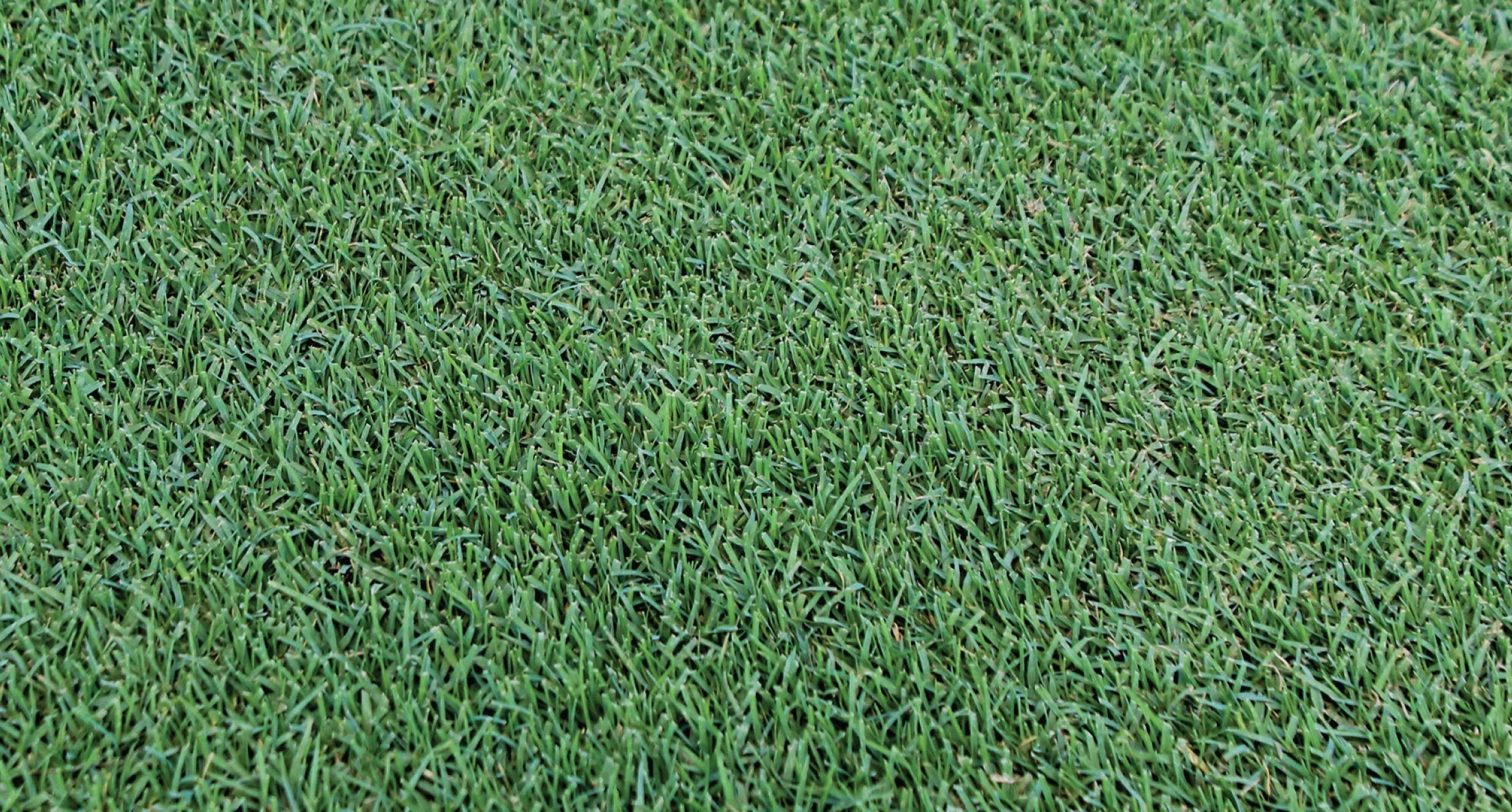
7. Bermuda Grass (Cynodon dactylon)
Advantages

  • Heat Tolerant: Perfect for hot climates.
  • Durable: Great for high-traffic lawns.
  • Low Water Requirement: Needs minimal watering once established.

Disadvantages

  • High Maintenance: Requires regular mowing and care.

  • Thatch Build-up: Frequent dethatching needed.

Conclusion

Selecting the right grass involves considering your region’s climate, soil type, and the intended use of the space. Each grass type has unique characteristics that make it suitable for specific needs. By understanding these factors, you can create a beautiful, functional lawn that enhances your outdoor space.

Contact us at 0720091000 for expert landscaping services across Kenya. Let us transform your outdoor space into a green paradise!

sources: (Agriinnovationhub, nature-and-garden, crystalgarden.com, asepsis-Kenya, ancoturf.com, baked bricks,Barmac, yates, agroduka, pennington seed, seed world, bethel farm)

Thursday, 1 February 2024

27 ECO-FRIENDLY TREE PLANTING-BAG ALTERNATIVES

Embark on an eco-conscious tree-planting journey with 27 innovative ways of raising seedling using biodegradable containers. Following my previous article on the ban on using polythene planting bags, I have gathered alternative cheaper ways of raising seedlings; ranging from Tissue Paper Roll Planting Bags to Biodegradable Fabric Pouches. Here you are to explore sustainable and creative methods for supporting tree growth while minimizing environmental impact in the face of climate change. Let us do this...

1. Biodegradable Fabric Pouches:

  • Get the biodegradable sheet from the shopping bags (used in Kenya currently after the ban on plastics)
  • Cut the fabric into rectangular shapes.
  • Fold and stitch the sides to create pouches.
  • Fill with a mixture of soil and compost.
  • Plant the tree seedling and nurture sustainable growth
  • You can also purchase readymade ones from suppliers. 
  • Mind the gauge. Go for heavy gauge for durability

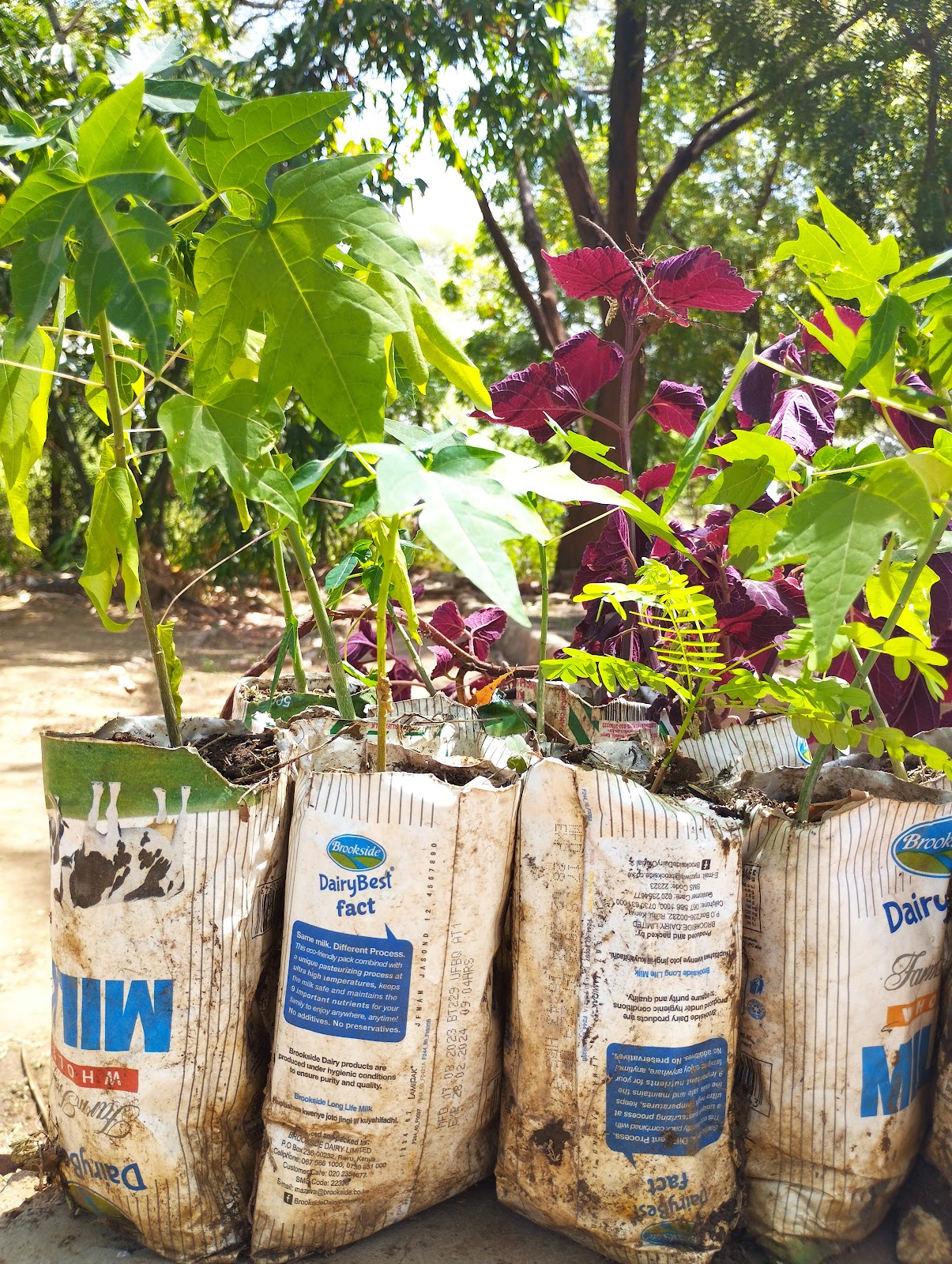
2. Used Milk Pack Containers:

  • Rinse and clean used milk packs thoroughly.
  • Cut them into suitable shapes for planting bags.
  • Create drainage holes at the bottom.
  • Fill with soil and plant the tree seedling.

3. Banana Stalk Tree Seedling Holders:

  • Cut the banana stalk into cylindrical sections.
  • Scoop out the pith, leaving a sturdy outer shell.
  • Add soil and plant the tree seedling.
  • Banana stalks can also be used as garden to provide natural moisture retention.

4. Bamboo Stem Planting Tubes:

  • Cut bamboo stems into segments, ensuring one end is closed.
  • Make drainage holes at the other end.
  • Fill with soil and plant the tree seedling.
  • Bamboo provides a durable and biodegradable option.

5. Reed Planting Bags:

  • Bundle reeds together to form a planting bag shape.
  • Secure the ends with natural twine or biodegradable rope.
  • Ensure the structure is stable.
  • Fill with soil and plant the tree seedling.

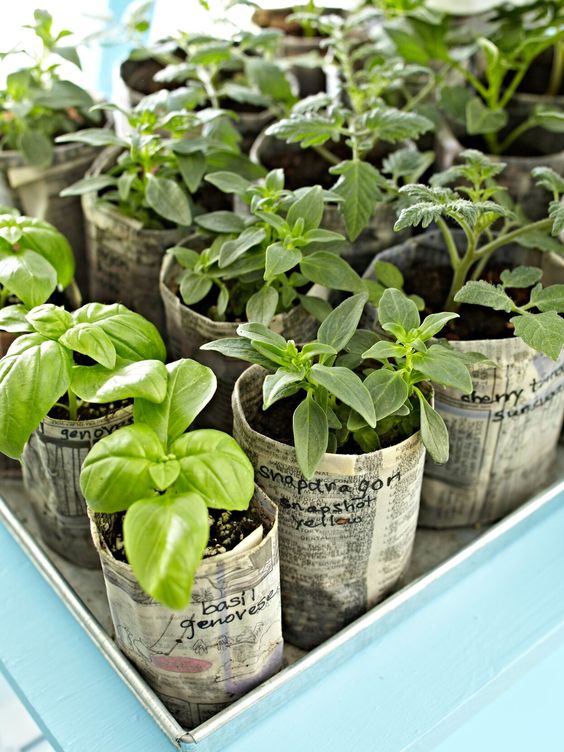
6 Newspaper Seedling Pots:

  • Roll newspaper sheets around a cylindrical object to form pots.
  • Secure the ends with tape or twine.
  • Place them in a tray for stability.
  • Fill with soil and plant the tree seedling.

7. Coconut Coir Pouches:

  • Cut coconut coir mats into pouch shapes.
  • Stitch or secure the edges to create a pouch.
  • Coconut coir is a natural fiber that is biodegradable.
  • Fill with soil and plant the tree seedling.

8. Cardboard Box Planters:

  • Cut cardboard boxes into smaller, manageable sizes.
  • Reinforce the sides for stability using sticks.
  • Add a layer of compostable material inside.
  • Fill with soil and plant the tree seedling.

9. Egg Carton Planting Cups:

  • Use empty egg cartons as small planting containers.
  • Fill each section with soil.
  • Plant one seedling per section.
  • Egg cartons are biodegradable and provide individual compartments.

10. Fabric Planting Bags:

  • Repurpose old fabric or burlap into planting bags.
  • Sew or secure the edges to create sturdy bags.
  • Ensure proper drainage by adding gravel at the bottom.
  • Fill with soil and plant the tree seedling.

11. Clay Pots with Newspaper Liners:

  • Line clay pots with newspaper to enhance biodegradability.
  • Place a layer of stones at the bottom for drainage.
  • Fill with soil and plant the tree seedling.
  • This combination offers a traditional yet eco-friendly option.

12. Jute Bag Tree Seedling Holders:

  • Cut jute bags into cylindrical shapes.
  • Stitch or secure the ends to create planting containers.
  • Jute is a natural and biodegradable material.
  • Fill with soil and plant the tree seedling.

13. Cornstarch-based Biodegradable Pots:

  • Purchase or create pots made from cornstarch-based biodegradable material.
  • These pots naturally decompose over time.
  • Fill with soil and plant the tree seedling.

14. Wood Shavings and Wax Cups:

  • Use discarded wax-coated cups or containers.
  • Mix with wood shavings to create a planting mix.
  • The wax provides water resistance while wood shavings enhance aeration.
  • Plant the tree seedling directly into this mixture.

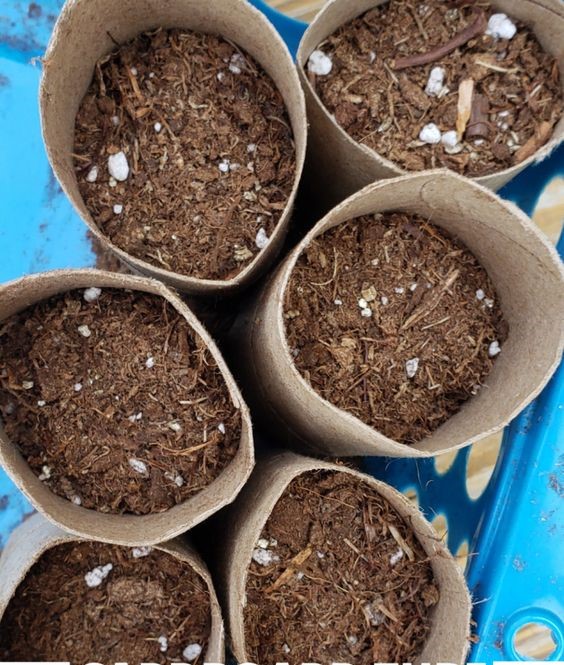
15. Recycled Paperboard Tubes:

  • Collect used paperboard 
  • Cut them into smaller segments.
  • Roll to form a tube
  • Seal one end with biodegradable glue.
  • Fill with soil and plant the tree seedling.


16. Seagrass Planting Baskets:

  • Repurpose seagrass baskets into planting containers.
  • Line the baskets with natural fabric to hold soil.
  • Seagrass adds a unique texture and is biodegradable.
  • Fill with soil and plant the tree seedling.

17. Hemp Fiber Tree Planters:

  • Utilize hemp fiber to create planting pots.
  • Hemp is biodegradable and eco-friendly.
  • Mold the fiber into pot shapes and secure the edges.
  • Fill with soil and plant the tree seedling.

18. Moss-Covered Planting Spheres:

  • Form spheres using a mixture of moss and natural binding materials.
  • These provide a unique and visually appealing planting option.
  • Fill with a suitable planting mix and plant the tree seedling.

19. Paper Mache Planting Bowls:

  • Craft planting bowls using paper mache techniques.
  • Ensure they are well-sealed to hold soil.
  • Decorate with natural dyes or leave them plain.
  • Fill with soil and plant the tree seedling.

20. Citrus Peels as Planting Containers:

  • Use hollowed-out citrus peels as small, biodegradable planting containers.
  • The natural citrus oils can act as insect repellents.
  • Fill with soil and plant the tree seedling.

21. Tin Can Planters:

  • Clean and remove labels from used tin cans.
  • Add drainage holes at the bottom using a nail or drill.
  • Paint or decorate the exterior if desired.
  • Fill with soil and plant the tree seedling.


22. Tissue Paper Roll/Tube Planting Bags
  • Collect empty tissue paper rolls.
  • Cut them to the desired size for planting bags.
  • Seal one end with natural glue or by folding securely.
  • Fill with soil and plant the tree seedling..


23. Old Tire Planters:

  • Find discarded old tires in good condition.
  • Clean the tires thoroughly to remove any contaminants.
  • Fill the tire with a suitable planting mix.
  • Plant the tree seedling in the center of the tire.

24. Plastic Water Bottles:

  • Collect used plastic water bottles.
  • Cut the bottles in half, creating two separate containers.
  • Make drainage holes at the bottom of each half.
  • Fill with soil and plant the tree seedling.

25. Plastic Drums:

  • Clean and cut plastic drums to the desired height.
  • Create drainage holes in the bottom for proper water drainage.
  • Ensure the drum is stable and won't tip over.
  • Fill with soil and plant the tree seedling.


26. Plastic Jericans:

  • Rinse and clean plastic jerricans thoroughly.
  • Cut an opening at the top for planting, leaving a sturdy base.
  • Add drainage holes at the bottom for water drainage.
  • Fill with soil and plant the tree seedling.

27. Old Jeans Planters:


  • Find a pair of old jeans in good condition.
  • Cut the legs off, leaving the top part with the waistband.
  • Sew or secure the bottom to create a planting pouch.
  • Fill with a mixture of soil and compost.
  • Plant the tree seedling in the pouch, ensuring proper drainage.


Saturday, 25 November 2023

Optimal Planting Spacing for Major Exotic Tree Species in Kenya

 Introduction 

In the symphony of nature, trees play a crucial role in creating a harmonious balance that sustains life. When it comes to planting trees, it's not just about the species, but also the spacing between them. Proper tree arrangement not only enhances their aesthetic appeal but also ensures optimal growth and environmental benefits. In this article, we'll explore some of the major exotic tree species and their recommended spacing, creating a lush and thriving landscape. Trees are not only beautiful and majestic, but they also play a crucial role in sustaining life on earth. They provide us with oxygen, clean air, food, medicine, and a habitat for wildlife. Trees also play a crucial role in regulating the climate, preventing soil erosion, and protecting biodiversity. Below are some of the 12 major exotic tree species in Kenya and their recommended spacing, creating a lush and thriving landscape.

1. Eucalyptus (Blue Gum)

Eucalyptus trees are widely planted for timber, poles, pulpwood and fuelwood due to their fast growth rate and adaptable to various soil conditions. To create a captivating eucalyptus grove, consider spacing them at intervals of 1.5 to 3 metres between each tree.

2.  Cypress (Cupressus lusitanica)

Cypress trees are often planted for timber production and as ornamental trees and can be found in various regions of Kenya. Ensure a spacing of 2.5 to 3 metres for these stately sentinels.

3. Grevillea (Grevillea robusta).

Commonly known as the Silk Oak, Grevillea robusta is valued for its rapid growth and is used for timber, shade, and erosion control. They are also used in agroforestry systems. It's also appreciated for its decorative flowers. Plant with a spacing of 2.5 to 6 metres, allowing these trees to spread their feathery leaves and golden blooms.

4. Neem (Azadirachta indica).

Neem trees are known for their medicinal properties and are also used for timber and other products. They play a role in agroforestry. Aim for a spacing of 5m to 10m during planting.

5. Casuarina (Casuarina equisetifolia).

Casuarina trees are often planted for soil stabilization and windbreaks, especially in coastal areas. They are also used for timber. Plant them with a spacing of 1 to 2 metres.

6. Jacaranda (Jacaranda mimosifolia).

Though native to South America, Jacaranda trees are commonly planted in urban areas in Kenya for their vibrant purple blooms. Plant them with a spacing of 4 to 9 metres.

7. Pine (Pinus spp.).

Various species of Pine, such as Pinus patula, are planted in Kenya for timber production. Pine forests are common in certain regions. A spacing of 2.5 to 3 metres.

8. Cassia (Cassia siamea).

Cassia trees are valued for their timber and are commonly used in agroforestry systems. Plant them with a spacing of 4 metres.

9. Acacia species (Acacia spp.).

Some exotic Acacia species, such as Acacia mearnsii, are planted for timber and tannin production. Plant them with a spacing of 5 metres.

10.  Nandi Flame (Spathodea campanulata).

While native to tropical Africa, the Nandi Flame tree has been widely planted in Kenya for its striking red-orange flowers and as an ornamental shade tree. Plant them with a spacing of 5 to 10 metres.

11. Australian Blackwood (Acacia melanoxylon).

Australian Blackwood is planted for its valuable timber and is known for its straight trunk and high-quality wood. Plant them with a spacing of 2 to 5 metres.

12.  Cordia (Cordia africana).

Cordia africana, also known as African Cordia, is an exotic tree species planted for its timber and as an agroforestry tree. Plant them with a spacing of 2 to 5 metres.

Conclusion

This article serves as a comprehensive and practical resource for individuals and organizations involved in tree planting and conservation efforts in Kenya, offering guidance on optimal planting spacing for major exotic tree species and highlighting the significance of conserving native tree species to ensure a sustainable and biodiverse environment.


RAINWATER: THE UNTAPPED GOLD OF DRYLAND

RAINWATER IS THE GOLD WE WASTE IN DRYLANDS. For dryland farmers, harvesting water is as important as harvesting their crop. They need ...