Thursday, 9 September 2021

WHAT WE DO WHEN YOU SEEK OUR LANDSCAPING SERVICES


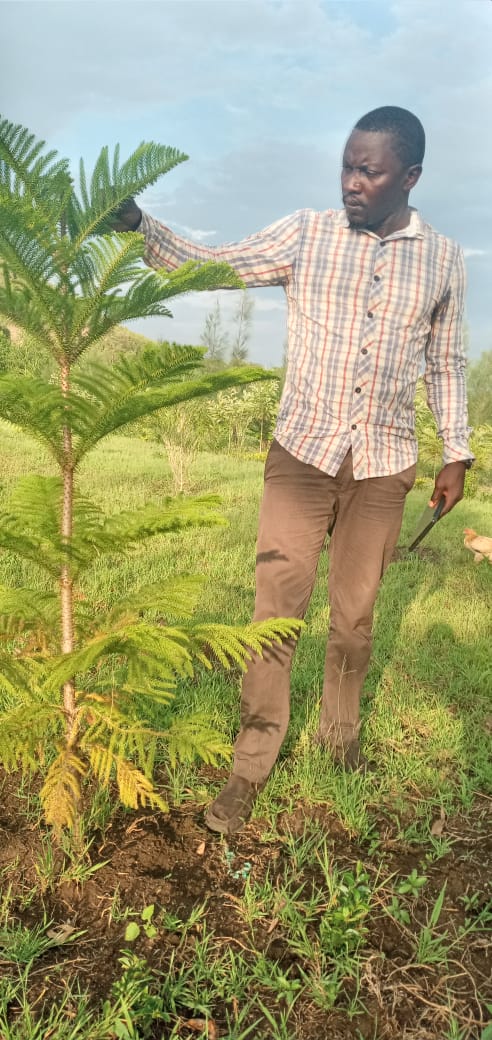
If you asked me, I would tell you that Landscaping is an art and a science at every length. Just like artist take time to come up with a sketch, draw the outline of a portrait, professional landscapers like us requires quite a bit a scientific knowledge. They also need to have some degree of artistry, or at least creativity coupled with science : Forestry, Botany, soils, or water conservation. This enable us step by step to infuse environmental conservation with an aesthetic element.


The Steps:


When you get referred to us, which we get mostly from clients whose projects we have implemented successful across the nation, or contact us directly,  we do this:

1. Reconnaissance/ Pre-visit:
We make arrangements to visit your site, to have an idea about the accessibility, site topography, soil type, vegetation around and take actual measure of the site features.


2. Planning:

This involves using the dimensions/measurements of compound or site  features previously taken during reconnaissance to come up with a flow, sketch of all the structures, existing trees, shrubs,houses, water ways, depression, fences, sewer lines all drawn to scale. Landscapers decide on which trees, shrubs, flowers, grasses, patios, gazebos etc would fit the site to improve on its beauty. Here we consider soil and water conservation strategies and expertly match the right plants for the particular soil type and water need. (Xeriscaping)


3. 2-D Rendering/Designing

Using the sketch a Landscape Designer, using a computer software now puts all the flow plan details in soft file. Mostly in Pdf or jpeg format. The client is furnished with the 2D Design to give his or her suggestions. The changes are made and sent to the client again for final approval.


3. 3-D Rendering


At this point, still using a computer software, the designer now produces a true representative drawing/blueprint of how the fully landscaped site will look like. All the main buildings, gazebos, patios, driveways, walk paths, trees, shrubs, vines, creepers, climbers, flowers, grasses, fountains etc are represented on this final document.

4. Bill of Quantities Drawing/Quotation

The Landscapers in consultation with Civil Engineer, draw specific costing for each and every item needed to implement the project, taking into account labour and professional charges. The quotation is sent to the client to have his/her views, given option to choose which budget fits. After thorough deliberation final quotation is drawn.

5. Formal Contract Signing

We now enter into a legally binding agreement, with the client to implement the project at the agreed budget and durations.

6. Implementation

At this stage, following the quotation, all the requirements are procured, plants, flowers, grasses, marbles, slabs, etc and ground broken.


6. Maintenance

This is the care given to the site by the Landscaping Company after fully implementing the project for 3 to 4 months. This is optional. It is worth noting that this process can take at  least 1 week and at most 2 weeks, majorly depending on location. 


Reach Us for Quality and  Timely project delivery at an affordable rate.

 Phone: +254740537387/720091000
Email: myexpertshub@gmail.com

Sunday, 6 June 2021

10 SURPRISING REASONS WHY YOU SHOULD HAVE THAT YOUR YARD LANDSCAPED


You are out on a shopping spree or just for a stroll, and you stride into a beautiful space, pathway lined up with intricately kept lush and green lawn-mowed grass. Then suddenly, you are effortlessly soaked in the sights of pretty flowers with their inviting blossoms, an aromatic scent hits your nostrils, and pleasing twittering of happy birds fill you ears. This makes the outdoor relaxing and rejuvenating. There’s just something about the sunshine rays filtering through the leaves; dancing in the gentle breeze....  That all sound you hear, the beauty you take in, the cool air...that is as a result of a good landscaped yard.

So what is Landscaping?

Landscaping is the art and science involved in the process of making a garden or other piece of land more attractive by altering the existing design, adding ornamental features, and planting trees, shrubs, flowers and grass. Landscaping being an art and science, people who want to study it to become professional landscapers must then take horticulture, landscape design, botany and business as relevant courses.

Photo: courtesy

Research has it that 90 per cent of people spend their time indoor. However human are still fully drawn to nature. More often than never to a good landscape. 

There are quite a number of colleges and universities offering these courses in Kenya as well as outside.

Advantages of Landscaping:

1. Lifts mood, better health.

A nicely landscaped area has away of appealing to our eyes, soothing to our noses and improving a first impression of a place, and generating an unmatched feel-good mood in us.

2. Cooler Temperatures

Pathways bordering well manicured grass lawn is cooler than concrete slabs, cement and even bare soil. With grass radiating cooler temperatures all around your home or business by as much as 40 degree. More reasons to have your space landscaped is because tall trees positioned strategically in your compound provide shade during the hottest times of day and lower your temperatures by as much as 40 degrees? This lowers your air-conditioning needs.

3. Purifies Air

Did you know that grass and trees are hard at work every day capturing dust and smoke particles, removing carbon dioxide, and producing life-giving oxygen? In fact, a single tree can remove 12kg of carbon dioxide from the air every year; equivalent to sequestering car emission driven over 17, 702 kilometres

Photo: courtesy

4. Supply Air.

The trees shrubs and vines used in landscaping give out the oxygen that all your organs depend on to function properly. Are you aware that one tree can also supply enough oxygen for 4 people every day

5. Control Storm and Soil Erosion.

The tall trees planted at the boundary act as wind breakers. Without them the building would wrecked by strong winds and storms. When xeriscape is incorporated, water run-off are channelled into drainage trenches or soaked in lawns. The grown trees when cut selectively later or pruned can be source of heat energy/ fuel. Further, their roots  act as soil anchor, storm water runoff buffers, reducing the flow of sediments and pollutants to nearby bodies of water.

6. Reduced Use of Natural Resources

Xeriscaping is a landscaping method that requires little or no irrigation. Xeriscaped landscapes can reduce water use by 50-60% or more compared to regular landscapes. The technique also helps reduce noise pollution from operating watering or slashing  equipment.

7. Improved Quality of Life

The beauty characterizing urban and peri-urban green spaced are courtesy of landscaping. And this is what makes such places nice to live at or visit with loads of physical and psychological benefits. It is know  that just looking at plants reduces blood pressure. Walking through a natural environment, even in the middle of a city, improves attention and memory of such places just like a young man laying his eyes on a beautiful lass on the city streets.

8 Higher Economic Benefits

Did you know that businesses that have high-quality landscapes tend to be more successful? It’s true! Customers claim to spend more money on goods and services if the commercial building has a high-quality tree canopy; and shoppers say they’re willing to travel longer distances to shop in a district with better landscaping. They also say they stay longer once they arrive if the landscaping is peaceful.

9. Increased Property Value

Features like aesthetically pleasing water falls, cascades, pools, ponds, steams, etc placed in your landscape can add unique texture, natural sounds, and new wildlife to your property. Generally landscaped properties cost higher.

10. Conserved Environment

Let it not be forgotten that in Landscaping involve mostly planting pf suitable  beauty trees, shrubs, herbs and vine that contribute largely to mitigating climate change. These plant absorb greenhouse gases. They further release the air we breath in. Landscaping therefore is one key conservational practice.

Photo: courtesy

Disadvantages of Landscaping

1. Cost.

Landscaping is generally regarded as an expensive venture by many. When it is not always. Handling the work by yourself can save some coins but you may end up messing than mending. There are cost attached as water bills, equipment purchase, maintenance and repair costs. Paying for professional services, buying plants and chemicals and management cost.

2. Environmental impact

Introducing non-native plants can have adverse effects to local population. So mostly use indigenous species. Some plants can be  or diseased. Chemical used can be detrimental effects to the environment. Noise pollution by mowing equipment can not be overemphasized.

Take-away:

Your landscaping doesn't need to milk your pockets dry. You can always work in phases to achieve your end goal of a beautiful home, school, hospital, church, golf course, etc Get in touch with a professional landscaper like us to help you realize that your dream landscaping. We shall surely guide you through every stage. Reach us on myexperthubs@gmail.com or +254740537387

Tuesday, 3 November 2020

BALANCING CONSERVATION WITH DEVELOPMENT

The elephant in the house; how do we balance Conservation with Development?

Credit: expresswork


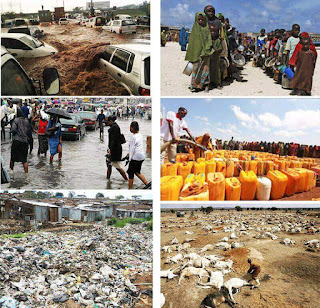
The damage to biodiversity( variety of plant and animal life in the world) became clear when a summary of a UN-backed report by the Intergovernmental Science-Policy Platform on Biodiversity and Ecosystem Services, revealed that 1 millions animal and plant species are currently threatened with extinction from human activity.

The report, compiled by 145 authors from 50 countries, is the most comprehensive look at humanity’s imprint on nature ever to be completed, having tracked the relationship between economic development and the impact on the planet over the last 50 years.

Impacts of human activities:

1. Almost 75% of the world’s freshwater is used for agriculture and livestock

2. 60 billion tons of water are extracted every year

3. Urban areas have more than doubled since 1992 at the expense of forest and wetlands

4. 400 dead zones in the oceans now exist due to fertilizer runoff

5. By 2050 when the world’s population is projected to be 9.8 billion, 75% and more than half of the oceans will have been “significantly altered”

Even well-intentioned development efforts can have adverse effects on natural resources. Industrial and urban waste, agricultural run-off and energy development pose major pollution risks. Conversion of land to agriculture degrades the land and increases sediment and nutrient runoff into the lakes. Introduction of non-native fish species may increase fisheries production, but it also eliminates important native species and destabilizes ecosystems. In sum, settlement expansion, agricultural development, road construction and energy development impact ecosystems, ecosystem services and biodiversity.

Photo credit: Tobby odhacha.


To balance Conservation and Development, all stakeholders must focus on developing applied research and tested and proven community-based conservational practices that support conservation and development in a sustainable manner, with an emphasis on projects related to road network and dam construction, oil and gas exploration and extraction, aquaculture siting and large-scale agricultural development.

Applying a variety of innovative ways that have been used to influence policy processes, from community pressure groups through elected and unelected leaders, to scientific discourse at the levels of directors of economic planning and conservation can be put into use if a balance is to be struck.

Conservation activists must now not be one-sided in the push to be heard. Their activism should be geared towards influencing government, through direct lobbying, influence of parliamentarians, wielding of science and research, and inter-community dialogue, networking and solidarity.

Participation should focus not simply on production of a plan, but should be designed to create dialogue space between multiple stakeholders with divergent goals and understanding.

What do think can spur a balance in Development and Conservation???

RAINWATER: THE UNTAPPED GOLD OF DRYLAND

RAINWATER IS THE GOLD WE WASTE IN DRYLANDS. For dryland farmers, harvesting water is as important as harvesting their crop. They need ...